

Interactive Microscopy through Optofluidics and Thermoviscous Flows
At our screening center, we are revolutionizing biological research with the integration of cutting-edge techniques like optofluidics via thermoviscous flows, especially through focused-light-induced cytoplasmic streaming (FLUCS). These innovative methodologies, described in our recent publications including Erbenet al. (2024), bring a new level of interactivity and precision to microscopy, ensuring that the right things happen to be at the right place at the right time.
Principles of FLUCS
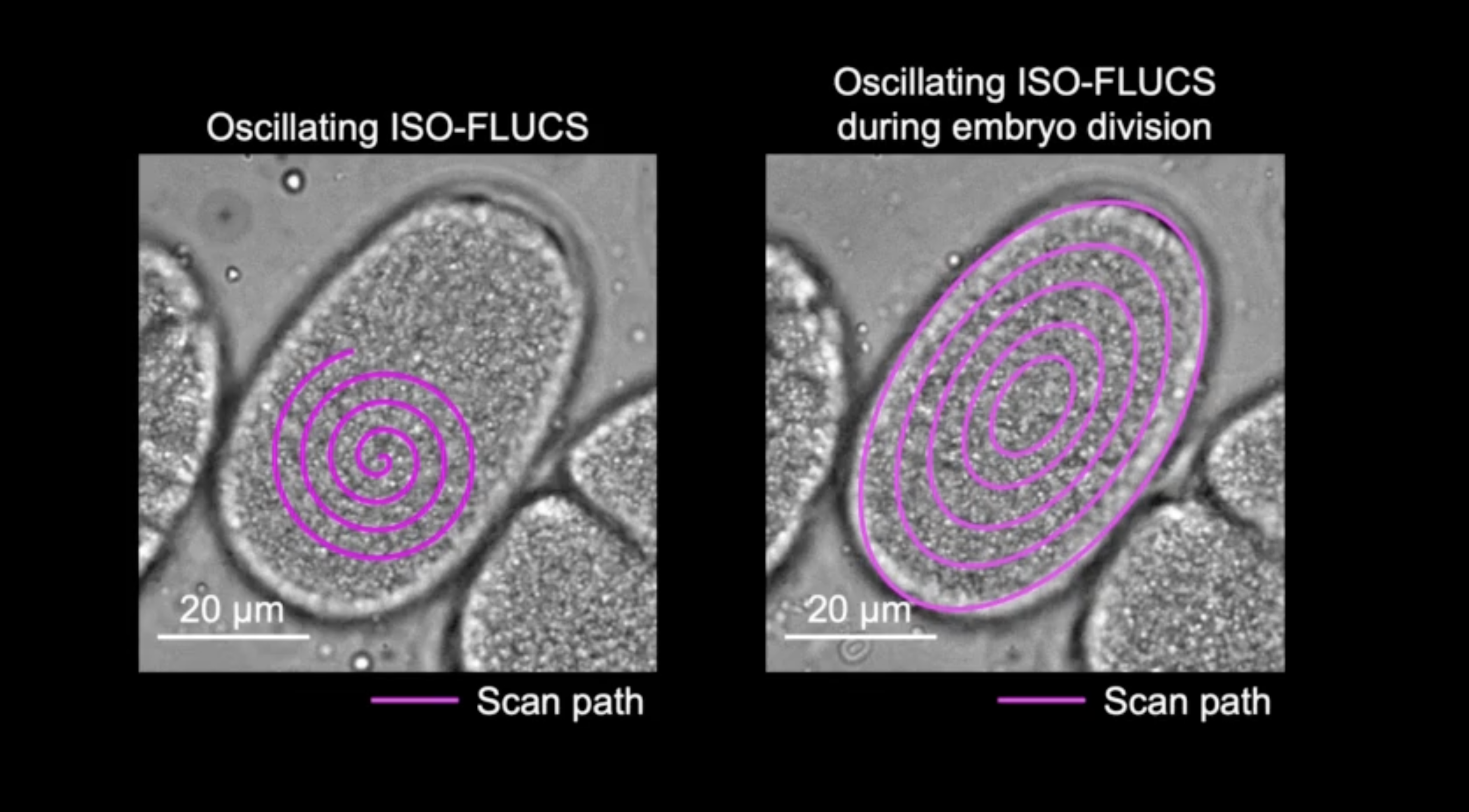
FLUCS utilizes mid-infrared laser scanning to create localized thermoviscous flows within the cellular environment. By scanning an infrared laser at 1455 nm across a defined path, we establish localized temperature gradients that generate controlled cytoplasmic flows. These flows enable precise repositioning of intracellular components such as organelles, proteins, and other essential cellular structures without physical contact.
Applications in Cellular Assemblies
The versatility of FLUCS and optofluidic techniques is profound for the preparation and manipulation of cellular assemblies:
Cellular Assembly: These techniques facilitate the creation of complex cellular structures by manipulating cells and their components with remarkable accuracy. This facilitates advanced biological studies and screenings that require intricate cellular organization.
Targeted Manipulations: FLUCS allows for the precise intracellular positioning of organelles, specific molecules and drugs, aiding in the study of their immediate effects and interactions within the cellular milieu.
Dynamic Probing: By enabling real-time observation and manipulation of cellular components, FLUCS helps in studying cellular kinetics, signaling pathways, and the behavior of biomolecules under various conditions.